Friday, 30 January 2015

News media

Galtung and Ruge (News values) 1965

This list has been added to and much discussed but allows a framework for discussion of what affects the news agenda.

We will look at some stories

Find out why this man is in the Tamworth Herald

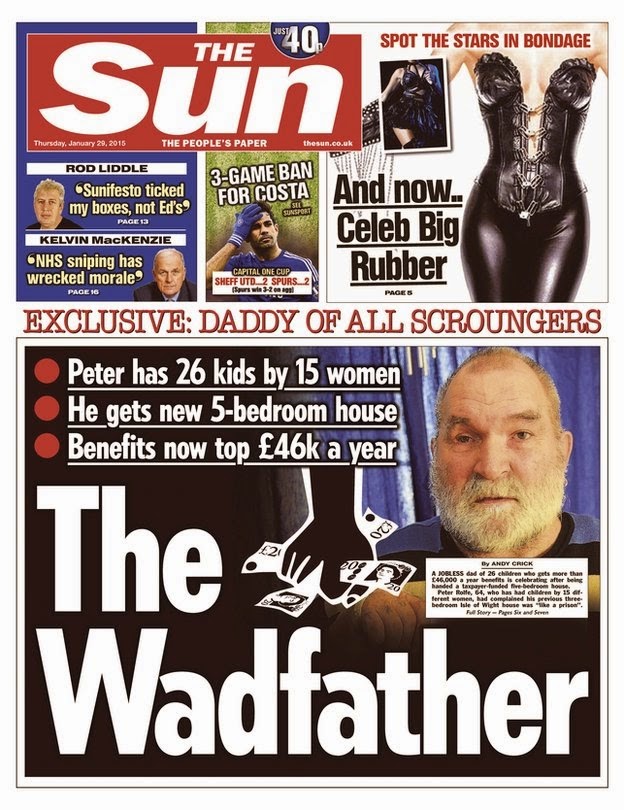
Find out why this man is in The Sun


Identify the audiences for these newspapers


You will take a story from the news and apply it to each of these news values

1.Frequency short-term events like murders are preferred over long-term developments like a famine

2.Threshold  the size of an event

3.Unambiguity ability to process the story and make the audience understand it

4.Meaningfulness how it relates to a specific audience in terms of cultural proximity - in which the event agrees with the outlook of a specific culture  or relevance - where events will be reported and discussed if they seem to have an impact on the ‘home’ culture, especially a threat

5.Consonance or ‘correspondence’ where the familiar is more likely to be thought than the unfamiliar

6.Unexpectedness - or ‘surprise’ where it is the rarity of an event which  leads to its circulation in the public domain;

7.Continuity once a story achieves importance will be continued to be covered for some time

8.Composition - this is to provide a sense of balance, gloomy news with good news, foreign with domestic.

9.Reference to elite nations events are more likely to be reported if they occur in the developed world; the threshold system would apply for developing countries’ events to be reported

10.Reference to elite persons - the famous and the powerful are more newsworthy than ordinary people

11.Personalisation - events are seen as actions of people as individuals; an institution may be personalised by reference to a prominent person within that organisation

12.Negativity - bad news is good for the press and TV news; the threshold is much lower for bad news than for good news

Find a story in your group and present it using the above to analyse news values


News values change depending on the audience

Identify the different audiences for the following news media;

Al Jazeera

BBC

Vice.com

Fox News

Newsround


Thursday, 29 January 2015

The Wadfather

The earthquake in Oakham last night was too late for the papers so on a slow news day the papers dig up stories they have been sitting on, which they know will strike a chord with the mood of the country and sell papers.. The Express goes for the weather again while the Sun goes back to an old favourite, the benefit cheat. Or in most cases people who seem to be doing well on benefits without working.

All media texts are made to be consumed by an audience

What does this news story tell us about the audience for this paper?

Monday, 26 January 2015

Institutions – Film Industry


Institutions – Film Industry

Warner Brothers - history

Studio system 2oth Century Fox, Paramount, NBCUniversal, Warners Brothers, Disney, Sony (MGM)

Mini-majors – dreamworks, Lionsgate, Weinstein

Golden Age of Hollywood

Genre films

Development of Horror or Development of film noir

Key landmarks / films

Distribution

Exhibition

Global market

Effect of online media on institutions

Convergence

Cross media ownership

Synergy

Digital technology - effect on film-making

Box office figures for similar films

Big studios and smaller partners

Case study

Working Title

Universal  $600m deal in 1999

Warner Brothers Leavesden Studios, Hertfordshire (Harry Potter)

Elstree

Pinewood (James Bond)

Case study :research a similar film and compare

Sin City (2014) (Weinstein) Miramax
LA Confidential (Waners Brothers 1997)
Blade Runner (Warner Brothers 1982)

Annabelle - Warner Bros (2014)
Ouija - universal
Box office
Production company
Audience


Top 10 highest-grossing films at global box office 2014
3. Maleficent, $757.8m
9. Interstellar, $636.2m

Sainsbury's Christmas advert

Discussing viral adverts we came across an advert that divided opinion and is therefore a good example of how a media text can be open to different readings by differing audiences.

Firstly, this advert by Sainsbury's in 2013 was picked and reaction in the class was almost unanimous seeing the advert as touching, heartwarming and uplifting rather than sentimental and cynical. Genuine emotion using a hand-held camera to make it feel like an authentic home movie.


Sainsbury's have tried to replicate this 'spirit of Christmas' theme to position their brand as about family and keeping the home fires burning with a more contentious 2014 Christmas advert. Once again most of the class felt that this was heart-warming and memorable.

Charlie Brooker also noticed this advert and has his own forthright opinion which he describes when discussing Christmas adverts for 2014.

"Shivering in a frosty trench – or “the frozen aisle”, in Sainsbury’s parlance – they pause to sing Silent Night, have a kickaround with their German counterparts, and bond over a chocolate bar. It’s all very poignant, if you mentally delete the bit where a supermarket logo hovers over the killing fields, which you can’t.
Boringly, the advert stops short of showing us the events of the following day, when war was resumed and they reverted to bayoneting one another in the face. Nectar points for each headshot, lads! Kill two Jerries, get one free!
Millions of young men were slaughtered during the first world war – “body-bagged for life”, in Sainsbury’s parlance – and doubtless as they lay dying in foreign fields, gazing down at what remained of their mud-caked, punctured, broken bodies, gasping their final agonised breaths, it would have been a great source of comfort for them to know their noble sacrifice would still be honoured a century later, in an advert for a shop."


Sainsbury's advert


Should the First World War be used to advertise a supermarket?

Is the supermarket commemorating the anniversary of the start of the war?

How do you respond to the advert?

Suggest there readings and identify appropriate audiences.

Negotiated
Opposite
Preferred

Media in the online age

Friday, 23 January 2015

Viral Advertising

What makes an advert work in the online age?

Carlsberg 

Adidas


Take one of the following viral adverts and analyse it. Or find your own.

Click here for the Adverts

How does the advert appeal to an audience?


Why has the advert gone viral?


Would this work as a traditional television advert?


Is the audience global or local?


Profile the target audience


Present back to the group.


Have you ever shared an advert?


What is the difference between online and televisual adverts?

In 2009 The UK has become the first major economy where advertisers spend more on internet advertising than on television advertising, with a record £1.75bn online spend in the first six months of the year.
The milestone marked a watershed for the embattled TV industry, the leading ad medium in the UK for almost half a century. It took the internet little more than a decade to become the biggest advertising sector in the UK.

Total UK advertising spend reached a new high of nearly £14bn in 2013, topping pre-financial crash levels.
Digital advertising now accounts for 50% several billion pounds this year 

This is driven by technology such as smart-phones and tablets.

However, traditional television and print advertising is still an important part of the industry and often complements the online advertising in a complete campaign.

Analyse the 'Compare the Market' campaigns as an example. This one is from 5 years ago

 And this one is a month old..

These television adverts work alongside a wider campaign.  However, it is the tv adverts that draw the audience in.

What tactics are used to appeal to an audience and sell a product?
Accents - slogans - repetition - use of technology, animation - cute animals - humour

Look online at the wider campaign to see what tactics have been used to further the campaign.

For example,
The relationship with Coronation Street, 
Appearance on This Morning
A viral offshoot of the bloopers

Examples of viral adverts selected by students

This 'Always' advert led to some interesting debate about representation of gender and the power of language

This 'Coke Zero' advert led to a discussion of online adverts as stunts or social experiments which were fun and associated the brand with certain emotions. In this one the active male is the audience as Diet Coke would be the female equivalent.  No women are featured in the challenge and Bond is seen to appeal mainly to a male audience.

Advert for 'Three' involves a series of adverts around the holiday theme.


This road safety advert was seen as particularly effective in getting the message across in a shocking way.

This advert from 2007 marks a shift from more traditional TV adverts to more abstract ways of selling a product. It has become an iconic advert. Meantime this Birmingham based company has been taken over by the American company KRAFT and even our dear old Creme Egg has been changed to a new recipe.

Superbowl adverts were explored as they are the most expensive slots in television. This one about Brotherhood suggests much about the audience which is much more traditional than those for many viral adverts. An audience of 55 million people saw this when it first aired.

We came back to the Carlsberg campaigns with this effective and engaging advert which poses the question, 'what would you do?'


Tuesday, 13 January 2015

Fox News

This is a good text and media institution to study when looking at the effect of political motivation on bias in the news media and its effect on the mediation of news and setting the news agenda.

Fox News in particular and mainstream American news media in general are right wing and often unapologetically biased in their news reporting. Often media commentators will espouse their own right wing views mediating the news through their own biased and often prejudiced viewpoint. Bill O Reilly is one example of what on radio could be termed 'shock jocks'; commentators who often rant about social issues and news events.  The queion is how influential these media commentators are and how it affects the news we recieve.  All news is mediated so how do we learn the truth when such a powerful and monopolistic media giant such as the Fox network represents events according to a right wing ideological agenda. 

Watch this clip of a report linked to the Paris attacks.  Hysterical reports about no-go zones in European cities. Caliphates in the UK include Birmingham which is apparently, 'totally Muslim where non-Muslims don't go in.  News reporting has become ripe for parody in the last week in response to the attacks in Paris and makes interesting viewing as it tries to gauge audience responses and represent news uncertain times. News media have a responsibility in times of public concern to report the facts and avoid hyperbole and instigating moral panics which could incite extreme reactions amongst the public.


What does the popularity Fox news suggest about the American public?

As consumers do we get the media we deserve?

Russell Brand does your job for you in this clip by de-constructing a piece on immigration by Bill O'Reilly  which lays bare the ideological distance between these two men. 
This clip also points out how power is possibly shifting in the age of new media technologies.  Bill O'Reilly repreents Fox News which has the monopoly on news reporting due to the wealth of its owner, Media magnate Rupert Murdoch and News International. By owning one of the most popular television networks Murdoch controls the means of conveying free to air messages across a television obsessed nation. A single vlogger in this case, Brand is using social media and the internet to counteract the messages given out by these powerful hegemonic voices. 
The way we get our news is moving toward social media and maybe this may challenge the power of monopolistic companies to twist the news agenda and mis-inform people. 

Could these examples of misrepresentation happen in the UK ?

Is the BBC a bastion against the owners of media institutions  representing the news according to their own ideloical views?
Has social media undermined the power of media magnates ?
Does he who controls the spice control the Universe?